eseq user manual
MIDI effects
MIDI effects change the notes before they reach the instrument. Audio effects change the sound afterward.
Add one
- Select an instrument track.
- Open MIDI FX and double-click an effect.
- Play the pattern and adjust. Use the enable button to compare with the plain notes.
Give an arpeggiator a held chord. Give a repeater a simple rhythm. Very short notes leave no room for repeats.
The effects
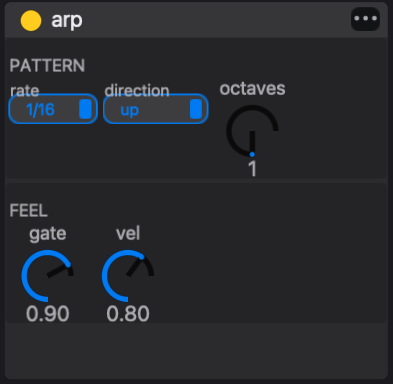
- arp plays the held notes one at a time. Rate, Direction, Octaves, Gate, and Velocity shape the result. Generated notes are not written into the pattern.
- beat-repeat repeats each note. Rate sets spacing, Gate sets length, Velocity scales strength.
- quantizer snaps playback to a grid. It is not the transport's record quantization.
- transpose-range folds pitches into a range between a minimum and maximum transpose.
- spatial-harmonic-delay adds delayed taps with pitch, velocity, and pan variation.
- trigger-to-track sends triggers to another track by number. Make sure that track has a sound.
Order and locks
Effects run in chain order; transpose before repeat differs from repeat before transpose. MIDI effect parameters take p-locks like any other control.
When a rhythm sounds wrong, bypass the MIDI effects before touching the synth.