eseq user manual
Patterns and scenes
Patterns belong to tracks. Scenes belong to the project.
What each one owns
A pattern owns its notes, step settings, p-locks, and its track's level, pan, sends, instrument, and effect values.
A scene picks one pattern per track and owns the bus and group settings. Groups have no patterns of their own; their processing lives in the scene.
If a track knob changes on its own, a different pattern was launched. If a bus knob changes, a different scene was.
Launch a pattern
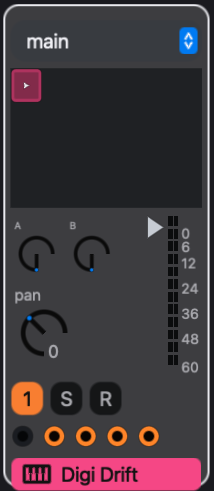
The small colored cells in a mixer strip are that track's patterns. Click one to launch it. Launch quantization in the transport decides whether the change is immediate or waits for the next boundary.
While stopped, clicking a cell sets the current scene's choice for that track. While the arrangement plays, a manual launch overrides the timeline until you press Back to Arrangement.
Launch a scene
The numbered buttons in the transport are scenes. Click one to recall every track's pattern and the bus settings. + duplicates the current scene; - removes it. Right-click the scene controls for more. The bank selector organizes larger projects.

Make a variation
- Duplicate a pattern: select its cell in the mixer and press Command-D. Edit the copy, or two scenes that share it both change.
- Duplicate a scene: press + in the transport. Use this for a whole new section.
Device headers offer Copy current values to all scenes when you want one setting everywhere.
Scenes in the arrangement
The scene lane recalls bus and group settings over time. It does not place notes. Use Place Scene Patterns to write a scene's patterns into the track lanes, or place clips by hand. See Arrangement.