eseq user manual
Parameter locks
A parameter lock, or p-lock, gives one step its own value for a synth, effect, or mix parameter. The pattern keeps its base value; the locked step overrides it.
Lock selected steps
- Click an active step, or select several. The inspector shows the count.
- Turn a synth or effect control. The value locks onto those steps.
- Play and listen.
- Command-click the steps to deselect them before editing the base sound.
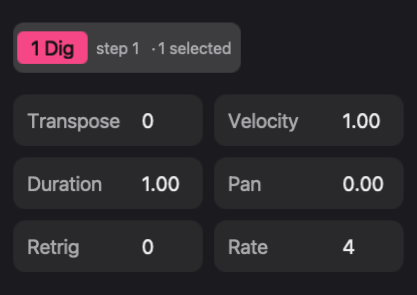
Selection stays while you use device controls. If an edit only changes part of a pattern, check the selected count.
Record a knob movement
- Deselect all steps.
- Enable Record and press Play.
- Hold and move a control while the pattern runs. Values print onto the steps passing under the playhead.
- Release to stop printing. Stop and disable Record when done.
Printed values are per step, not a continuous curve. Edit them afterward in the Piano roll automation lane.
The marker
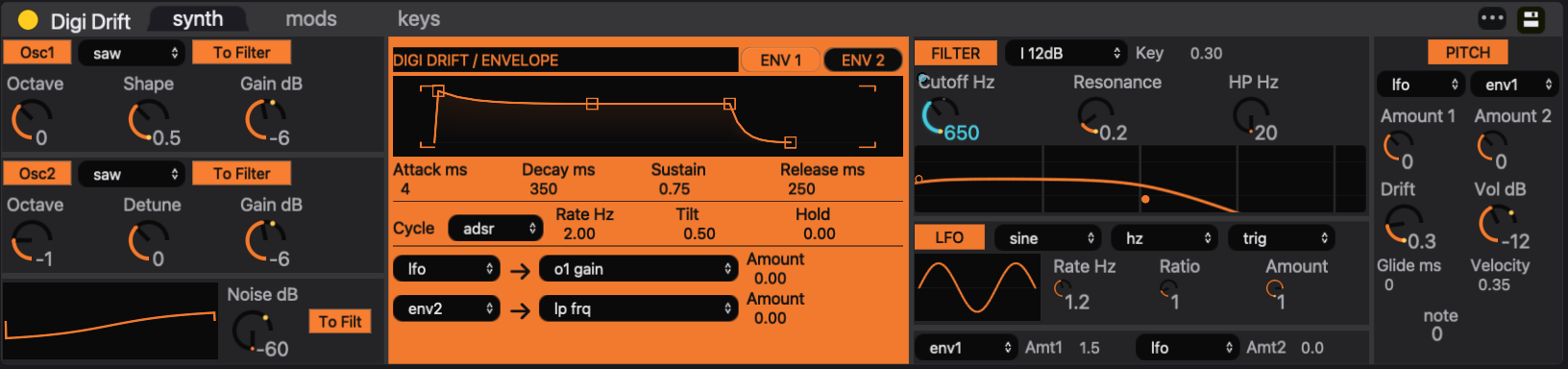
A small colored marker on a control means that parameter has locks somewhere in the pattern. The displayed value follows the selected step or the playhead, so a knob that jumps during playback is recall, not an edit.
Clear locks
- Right-click a marked control and choose Clear p-locks to remove that parameter's locks across the pattern.
- Double-click a point in the piano roll lane to clear one step.
Notes and other parameters are untouched. Moving the base value never clears locks.
A knob that ignores you
Check the marker first. If the parameter has locks, playback recalls them right after your edit. Then check the owner: track values follow patterns, bus and group values follow scenes.